
Pitzil Avila-Castellanos

Experience

Tap or click a role to read more.

International Youth Alliance for Peace logoSystems, Intelligence, and Monitoring InternInternational Youth Alliance for Peace

Colombo, Sri Lanka · July 2026 – Present

I conduct structured discovery interviews with NGO partners across South Asia and Africa, synthesizing what I learn into organizational assessment profiles that inform IYAP's international partnership strategy. This feeds into IYAP's Global Alliance and Stakeholder Intelligence System, laying groundwork for a planned PostgreSQL and Django database to centralize international program partnership data.

I also support reporting and monitoring system improvements by organizing and structuring multi-stakeholder data across IYAP's international programs, and produce written content, including a published blog on education equity, stakeholder briefings, and professional communications, reaching volunteers across six or more countries.

Watoto, Intl. logoSoftware Engineering InternWatoto, Intl.

Kampala, Uganda · February 2026 – June 2026

I engineered an offline-first edge server on a LattePanda Iota with GL.iNet Opal networking, broadcasting a private WPA3 hotspot that serves a Django application with zero internet dependency, built to withstand power outages in a Ugandan community school.

The production stack includes a Django REST API, a PostgreSQL data layer designed to manage complex relational models, a React frontend, Gunicorn WSGI, and an Nginx reverse proxy with HTTPS, all running on the edge device itself. The system is built and technically complete. Deployment is on hold until I can travel, so I'm careful not to overstate it as already in use.

Read the Projects case study
Azusa Pacific University sealJunior System AdministratorAzusa Pacific University

Azusa, CA · January 2026 – Present

I'm pursuing a B.S. in Computer Science with a Minor in Data Science at APU.

I developed a Python-based automated audit system that ingests and analyzes endpoint data across more than 700 macOS devices, surfacing compliance patterns against the university's naming conventions.

I also standardize Mobile Device Management workflows using Jamf Pro, Intune, and Apple School Manager to streamline campus-wide technology deployments and reduce manual overhead.

Newegg logoData Analyst InternNewegg Commerce, Inc.

Diamond Bar, CA · June 2025 – August 2025

I conducted a 55-point customer experience audit, applying structured data analysis to identify behavioral patterns across key touchpoints, and synthesized the findings into executive presentations for more than ten company leaders and C-suite executives.

I also produced weekly Excel-based reports on customer experience trends for direct C-suite review. This internship is where data analysis clicked for me: advocacy is nothing without the numbers to back it up.

Bithiah's Family Services logoCoordinator of VolunteersBithiah's Family Services

Pomona, CA · September 2020 – Present (volunteer since 2014)

I lead a bilingual initiative that has translated more than 80 pages of materials into Spanish for the Latinx families we serve, and I've coordinated more than 50 supply distribution events for foster and adoptive families.

This is where my advocacy work started, when I was seven years old, and it's still where it's rooted.

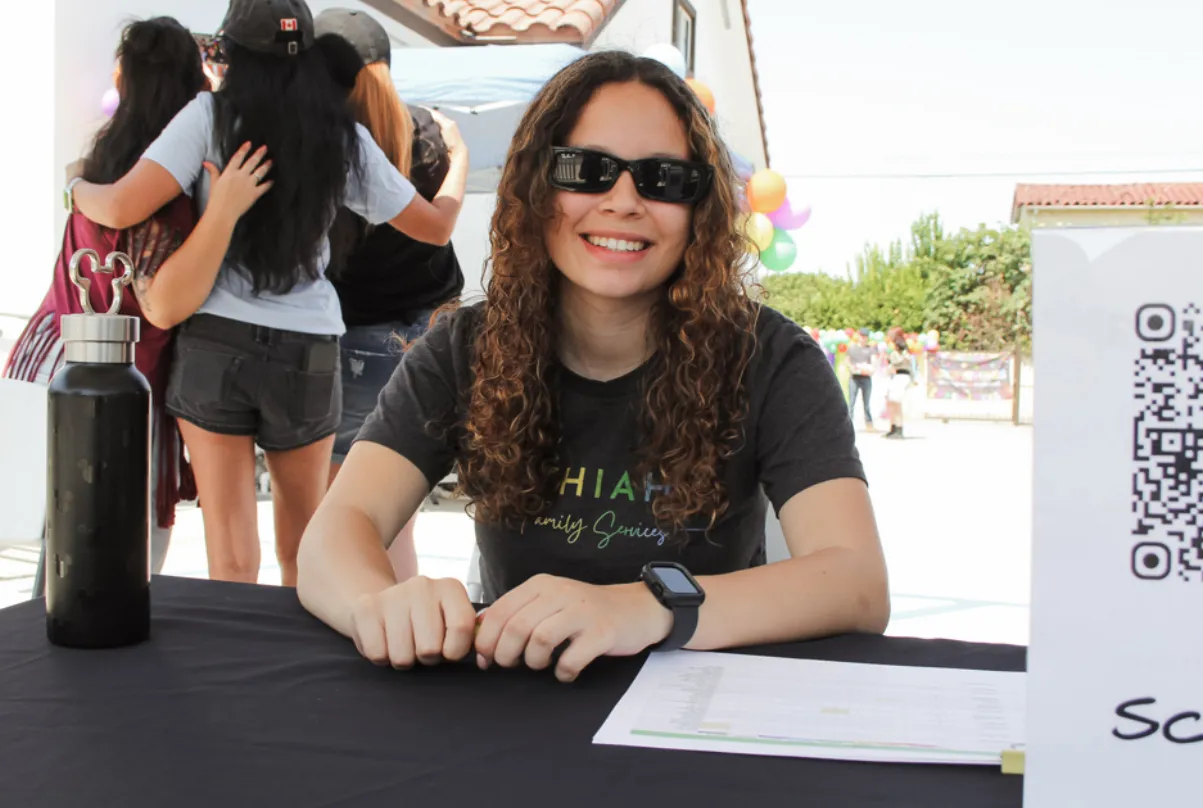
Pitzil Avila-Castellanos at a Bithiah's Family Services volunteer table during a community event
Photo courtesy of Bithiah's Family Services

Projects

CVBuilder: offline infrastructure for a Ugandan community school

Watoto, Intl. · Kampala, Uganda · Built February – June 2026

A resume-building app that runs entirely on a single-board computer broadcasting its own Wi-Fi hotspot — no power grid or internet required.

Read more & watch demo

The community school this was built for doesn't have reliable power, and it doesn't have stable internet. Most software assumes both. CVBuilder is designed around the opposite assumption: that connectivity might never come, and the system still has to work.

The entire application runs on a LattePanda Iota, a single-board edge computer small and power-efficient enough to operate in a low-resource environment. A GL.iNet Opal router turns that device into its own private network, broadcasting a WPA3-secured hotspot that students connect to directly. There's no route to the outside internet because there doesn't need to be one. The app, the database, and the network it runs on are all self-contained on the same device.

The stack is a Django REST API backed by PostgreSQL, served through Gunicorn, with a React frontend and an Nginx reverse proxy handling HTTPS and captive-portal routing. Every architectural decision traces back to the same constraint: this has to keep working through power outages, with no IT support on hand, for students who have never had a reason to trust that a piece of technology would work for them.

The system is built and technically complete. Deployment is on hold until the team can travel to Uganda. More detail on the internship this came out of is on the Experience page.

Scorecast: predicting international soccer outcomes

Python, scikit-learn, Gradio · Built around the 2026 FIFA World Cup

A machine learning web app that models expected goals using Poisson regression to predict win, draw, and loss probabilities for any international matchup since 1990.

Read more & watch demo

Rather than predicting win, draw, or loss directly, Scorecast models the expected goals each team will score using two separate Poisson regression models, one for the home side and one for the away side, then builds a score probability grid to derive win, draw, and loss probabilities from it. That's more expressive than a direct three-class classifier because it captures the full distribution of possible scorelines, not just the single most likely outcome.

Each prediction draws on Elo ratings that update after every match with a competition-weighted K-factor, recency-weighted form and goals over the last ten matches, head-to-head history between the two teams, and match context like venue and competitiveness. All of it is built chronologically, replaying matches from 1990 onward so no future information leaks into training.

The Gradio app has a dedicated 2026 World Cup tab covering all 48 qualified nations, plus a general tab for any matchup in the dataset, each returning a win/draw/loss probability chart, team stats, and a key-factors summary. Built with Python, scikit-learn, scipy, pandas, NumPy, and Gradio, using Kaggle's historical match and FIFA ranking datasets.

Looking ahead: a data system for Bithiah's Family Services, replacing years of Google Sheets documentation, starting spring 2027.